How Hackers Read Your Email History Like a Roadmap — And What You Can Do About It
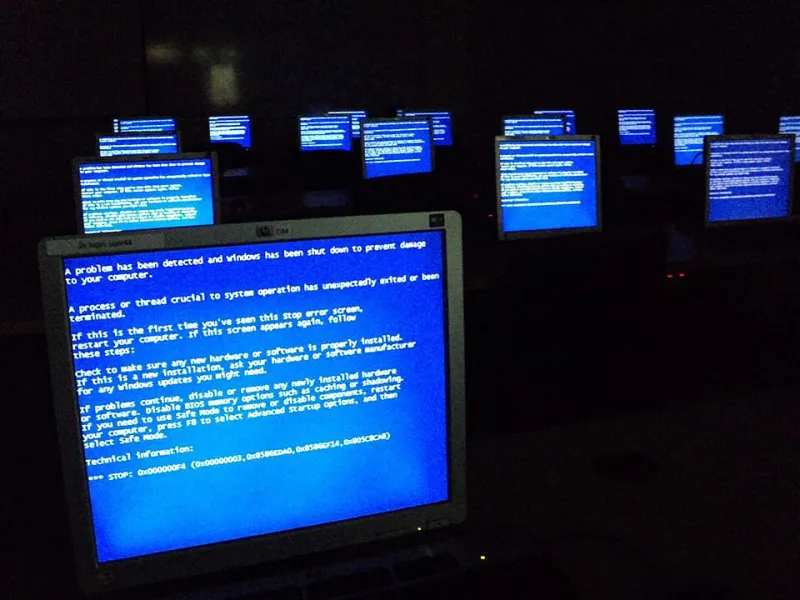
Photo: Tamatak 'v chamatak ki, Public domain, via Wikimedia Commons
Imagine handing a stranger a detailed journal of everywhere you've shopped, every service you've signed up for, and every company that has your billing information. You'd never do that on purpose. But if you've been using the same email address for the past five, ten, or fifteen years, you've essentially already done it — you just didn't know anyone was reading.
Your email address is more than a contact point. It's a breadcrumb trail, and some very motivated people have gotten extremely good at following it.
The Pattern Problem Nobody Talks About
Here's something most people don't think about: your email address, combined with publicly available data breach records, tells a surprisingly complete story about you. Hackers don't just want passwords. They want context. They want to know which banks you use, which streaming services you subscribe to, which retailers have your credit card on file.
When a data breach exposes email addresses — and they happen constantly, with hundreds of millions of records dumped onto dark web forums every year — criminals don't just look at the email in isolation. They cross-reference it. Tools exist specifically to aggregate breach data and show every known breach a given email address has appeared in. That means a hacker can look at your address and immediately see: you had an account at Adobe in 2013, at LinkedIn in 2016, at Equifax in 2017, and at a dozen other services since then.
That's not just a list of your accounts. It's a timeline of your digital life.
Social Engineering: How Criminals Turn Your History Against You
Once a bad actor has your email history mapped out, they shift into social engineering mode. This is where things get genuinely scary — because the attacks stop feeling like obvious scams and start feeling like legitimate communication.
A common tactic is called spear phishing. Unlike generic phishing emails that blast out millions of "your account has been compromised" messages, spear phishing is targeted and personalized. A criminal who knows you had an account on a breached retail site can send you an email that references that specific retailer, mentions the general timeframe of the breach, and asks you to "verify your updated payment information" through a convincing fake login page.
Because the email is specific — because it references something real — your guard drops. You think: this must be legitimate, they know I had an account there. That's the whole point.
Another tactic involves account takeover chains. If a criminal can get into one account tied to your permanent email, they often use that foothold to request password resets on other accounts. Your email becomes the master key. And because you've been using the same address everywhere for years, there are a lot of locks it fits.
There's also pretexting, where someone calls or emails you pretending to be from a company you actually use, armed with enough real information — your email, your username, sometimes even partial account details pulled from breach data — to sound completely credible. The goal is to get you to hand over the remaining piece of information they're missing.
Why Your Permanent Address Is the Gift That Keeps Giving (To Criminals)
The core problem with a single, permanent email address is that it accumulates. Every year you use it, it appears in more places, gets exposed in more breaches, and becomes a more complete data point. The longer you've had it, the richer the profile a motivated attacker can build around it.
There's also the issue of email address predictability. Many people use variations of their name — [email protected] is almost a cliché at this point. Criminals can guess these with automated tools, then check whether those addresses appear in breach databases. If they do, the targeting begins.
And once your address is in circulation, it tends to stay there. Spam lists get sold, breach data gets repackaged and resold, and old exposures have a way of surfacing years later. You can't un-ring that bell.
Breaking the Pattern With Disposable Addresses
This is where the logic of disposable email addresses shifts from "mildly convenient" to "genuinely strategic."
When you use a unique disposable address for every service you sign up for, you're doing something powerful: you're severing the connections that make social engineering possible. A hacker who finds one of your disposable addresses in a breach database learns almost nothing useful. They can't cross-reference it with your other accounts because it isn't linked to them. They can't build a behavioral profile because the address was created for one purpose and nothing else.
The pattern disappears. And without a pattern, targeted attacks become much harder to execute.
Practically speaking, here's how this works: instead of signing up for a new shopping site with your real Gmail address, you generate a disposable address through a service like FakeMail Online. That address receives confirmation emails and any future communication from that retailer — and that's it. If that site gets breached, the exposed address is a dead end. If it starts sending spam, you just stop using it. Your real inbox stays clean, and your real address stays out of breach databases.
What to Do With Your Existing Address
If you've been using the same email for years, you can't erase what's already out there — but you can stop making it worse. A few practical steps:
Check your exposure. Sites like Have I Been Pwned let you enter your email address and see which known breaches it's appeared in. It's often a sobering list. Knowing what's out there helps you understand your current risk level.
Start compartmentalizing going forward. You don't have to abandon your old address overnight. Use it for communication with people you actually know, and start routing new signups through disposable addresses. Over time, the new exposure stops.
Be skeptical of anything that references your account history. If you get an email that seems suspiciously specific — referencing a service you actually used, at a time you actually used it — treat that specificity as a red flag rather than a sign of legitimacy. Criminals use real information to manufacture trust.
Enable two-factor authentication everywhere you can. Even if someone gets into your email ecosystem, 2FA adds a layer that's much harder to bypass remotely.
The Harder Target Principle
Security experts sometimes talk about the "harder target" principle: you don't have to be perfectly secure, you just have to be harder to attack than the next person. Criminals, especially those running automated or semi-automated scams, tend to move toward easier victims.
A permanent email address that's been floating around the internet for a decade is an easy target. A rotating set of disposable addresses, compartmentalized by purpose, with no obvious patterns connecting them, is a much harder one.
You can't make yourself invisible — but you can make yourself a lot less readable. And in a threat landscape where your email history is being actively mined for ways to manipulate you, that's worth quite a bit.