How a Single Credit Card Application Can Unravel Your Entire Digital Identity
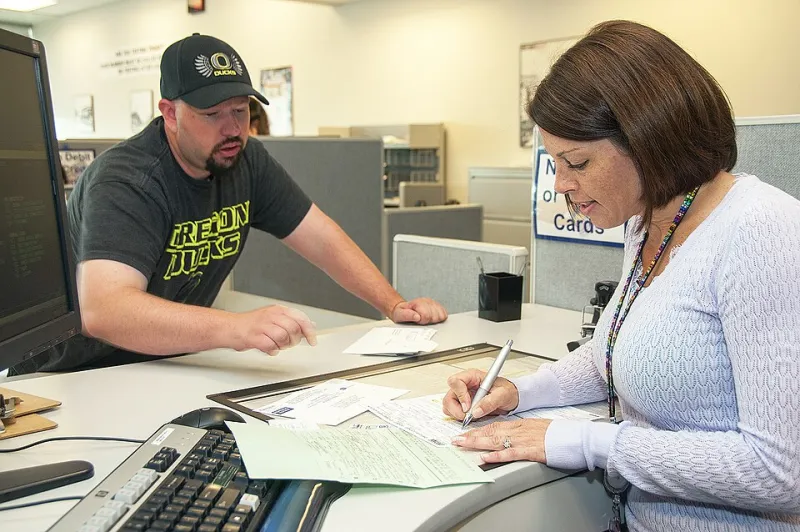
Photo: Oregon Department of Transportation, CC BY 2.0, via Wikimedia Commons
You're standing at the checkout counter at a big-box retailer. The cashier offers you 20% off your entire purchase if you apply for their store card right now. You're buying a new laptop. The math checks out. You hand over your info — name, address, Social Security number, and yes, your email address — and walk out feeling pretty good about yourself.
What you probably don't realize is that your email address just started a very different kind of journey.
The Application Process Is a Data Collection Event
When you apply for a credit card — whether it's a store card at a retailer or a traditional card through a bank — you're not just filling out a financial form. You're feeding a data pipeline. Financial institutions and retail credit partners collect your personal information during the application process and, depending on their privacy policies (the ones nobody reads), they may share or sell portions of that data with third-party marketing partners, data brokers, and affiliate networks.
Your email address is particularly valuable in this ecosystem. Unlike a mailing address, which requires physical effort to exploit, an email address is an instant, low-cost attack surface. It can be plugged into automated phishing systems, matched against existing breach databases, and cross-referenced with your social media profiles — all within hours of your application being submitted.
This isn't paranoia. The Federal Trade Commission has documented how data brokers aggregate consumer information from financial transactions and resell it in bulk. Some of that data ends up in legitimately shady corners of the internet where identity thieves shop for targets.
Here's What a Real Attack Looks Like
Let's walk through a realistic scenario. You apply for that store card using your primary Gmail address — the one tied to your Amazon account, your bank login, your health insurance portal, and about 200 other services you've signed up for over the years.
A few weeks later, your email address gets bundled into a data broker's file and eventually makes its way into a phishing list. You start receiving emails that look remarkably official — maybe it's a message claiming your new store card account has been flagged for suspicious activity, or a notice that your credit limit is being reviewed and you need to verify your information.
These emails are crafted to look legitimate because the attackers already know you have an account with that retailer. They know your name. They may even know the approximate date you applied. That context makes the phishing message far more convincing than a generic scam blast.
You click the link. You enter your credentials. And now someone else has access to an account connected to the same email address that protects your bank, your retirement fund, and your health records.
This is what security researchers call an account takeover chain — and it starts with one exposed email address.
Why Your Primary Email Address Is the Weakest Link
Most people treat their primary email address like a utility — something permanent and universal, like a phone number. The problem is that this permanence is exactly what makes it dangerous. The longer an email address has been in circulation, the more services it's connected to, and the more damage a bad actor can do with it.
Phishing attacks succeed not because people are careless, but because the emails are targeted. When a scammer knows which financial products you hold, they can craft messages that feel eerily specific. Your guard drops. That's the whole game.
Using the same email address for a credit card application that you use for your primary banking login creates a direct thread that connects two high-value targets. Sever that thread, and you dramatically reduce your exposure.
Where Disposable Emails Come In
This is exactly the kind of situation a disposable email address was built for. Services like FakeMail Online let you generate a temporary, anonymous email address in seconds — no registration, no personal information required. You use it for the application, receive any confirmation or account-related messages through it, and your real inbox stays completely out of the picture.
Here's how to approach it practically:
Before you apply for any new credit card or financial product, spin up a disposable address. Use it as the contact email on your application. If the issuer needs to reach you for account alerts, you can check the disposable inbox for those messages.
Keep a note of which disposable address you used for which account, especially if you're applying for multiple products around the same time. A simple note in a password manager or even a notes app works fine.
If you get approved and need ongoing access, some people choose to set up a dedicated forwarding address — a permanent but isolated email account used exclusively for financial correspondence. This keeps your primary inbox clean while still giving you a stable address for statements and alerts.
If the application gets declined, the disposable address has served its purpose. The rejection and any associated data is tied to an address that can't be traced back to your real identity or used to access anything else you own.
When a Disposable Email Isn't the Right Tool
Fair warning: there are situations where using a temporary address during a financial application can create friction. If you're approved and the issuer sends time-sensitive account setup instructions to a disposable inbox that expires before you check it, you could miss important onboarding steps.
The workaround is to use a disposable service that gives you enough time to collect and act on initial correspondence, or to transition to a dedicated (but still isolated) address once the account is established. The goal isn't to make your financial life unmanageable — it's to stop your primary email from being the single point of failure for your entire digital identity.
The Bigger Picture
Credit card applications are just one of many high-risk moments where your email address gets exposed to systems you don't fully control. But they're worth calling out specifically because the stakes are high — you're already handing over sensitive financial and identity information. Adding your primary email address to that package amplifies the risk considerably.
The good news is that the fix is genuinely simple. A disposable email address costs you nothing and takes about ten seconds to generate. That's a pretty reasonable trade for keeping your real inbox — and everything connected to it — out of reach.
The next time someone offers you a discount for applying on the spot, go ahead and take the deal. Just don't take the privacy risk that comes with it.