Your Primary Inbox Is a Skeleton Key — And Criminals Know It
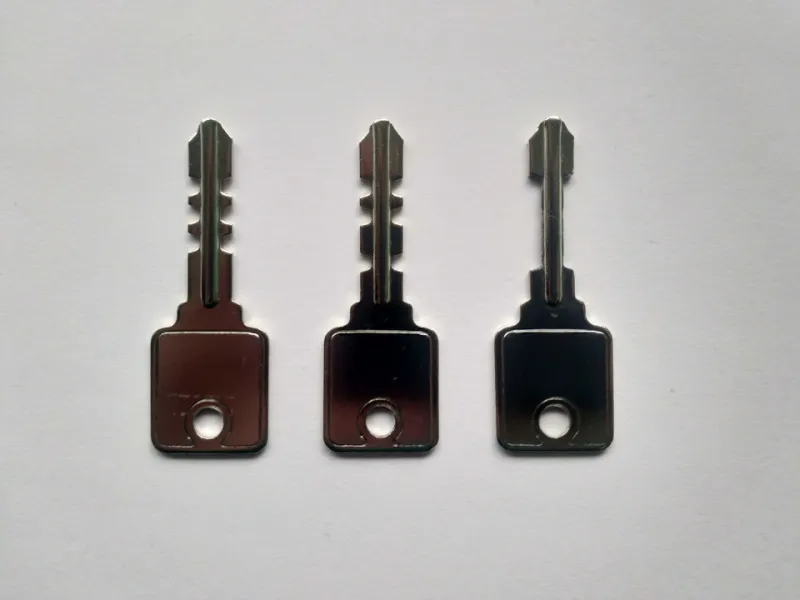
Photo: Lukkojaska, CC BY-SA 4.0, via Wikimedia Commons
The One Thing Standing Between You and a Really Bad Day
Think about the last time you signed up for something online. A new streaming service, a retail loyalty program, maybe a food delivery app. What did you type into that little email field? Probably your main address — the one you've had for years, the one your bank emails, the one tied to your Apple ID or Google account.
Now imagine someone else has that address. Not just the address itself, but a confirmed, active version of it that they've matched to your name, your zip code, and a password you used three years ago on a site that got breached. That's not a hypothetical. That's Tuesday for credential stuffing operations running against millions of accounts simultaneously.
Your primary email address is the skeleton key to your digital life, and the uncomfortable truth is that most of us hand it out like a business card.
Why Hackers Go After Your Main Address First
There's a reason cybercriminals specifically hunt for primary email addresses rather than throwaway ones. It's all about leverage.
When you use the same main address across dozens of accounts, you've created a single point of failure. A breach at some random e-commerce site you used once in 2019 can hand an attacker the exact email address associated with your Chase account, your Gmail, your health insurance portal, and your Amazon Prime. They don't even need your password right away — they just need to hit "Forgot Password" and let your own inbox do the rest.
This is credential stuffing in a nutshell: automated bots take leaked username/password combos from one breach and try them across hundreds of other services. If you've reused passwords (and statistically, you have — most Americans do), the domino effect is swift and brutal. And it all starts with that one email address you've been using since college.
Data brokers play a similar game, just with less urgency and more patience. They aggregate your email address from loyalty programs, public records, retailer databases, and app permissions, then sell enriched profiles to advertisers, insurers, and anyone else willing to pay. Your primary email becomes the thread that ties your identity together across completely unrelated companies. It's the glue in your consumer profile — and once it's out there, you can't un-ring that bell.
Real-World Scenarios Where a Disposable Address Changes Everything
Let's get specific, because abstract risk is easy to dismiss.
The data breach cascade. A mid-size online retailer you bought a birthday gift from three years ago gets breached. You barely remember the site. But you used your main Gmail address to check out as a guest. Now that address — confirmed active, matched to your full name and home address from the shipping info — is floating around on a dark web marketplace. Someone buys the list, runs your email against a credential stuffing tool, and gets into your Spotify account. From there, they find a connected credit card. You don't notice for six weeks.
If you'd used a disposable address for that one-time purchase, the breach still happens — but your real email isn't in it. The chain breaks before it starts.
The "free tool" trap. You sign up for a free PDF converter, a browser extension, or a random SaaS tool for a one-time project. These services frequently monetize their user lists by selling email addresses to data brokers. You've now permanently linked your real identity to that vendor's data partners. A temp address costs you nothing and keeps that transaction isolated.
The phishing setup. Attackers who know your primary email address can craft highly targeted phishing emails that reference real services you use. If they've matched your email to your bank, your ISP, and your phone carrier through broker data, they can send convincing impersonations of all three. A secondary email used for lower-stakes signups makes it much harder to build that profile in the first place.
A Simple Framework: Real Email vs. Disposable Email
Not every account deserves the same level of protection, and not every service deserves your real identity. Here's a practical way to sort it out.
Use your real email for:
- Financial accounts (banking, investment, tax prep)
- Government services (IRS, Social Security, healthcare.gov)
- Your primary Apple ID or Google account
- Work and professional communications
- Healthcare providers and insurance portals
- Accounts where legal identity verification is required
These are accounts where the inconvenience of a fake address outweighs the risk, and where you genuinely need reliable delivery and account recovery.
Use a disposable or secondary email for:
- Retail and e-commerce signups (yes, even big ones)
- Free trials and limited-time offers
- App downloads that require registration
- Newsletter subscriptions
- Forum and community accounts
- Any service you're trying out and might not keep
- Giveaways, contests, and promotional offers
- Any site you've never heard of before today
The mental model is simple: ask yourself whether this account, if compromised, could be used to access anything else important. If the answer is no — if it's completely isolated from your financial and identity infrastructure — a disposable address is the smarter move.
The "Sacrificial Inbox" Strategy
Some privacy-conscious users go a step further with what you might call the sacrificial inbox approach. They maintain a real secondary email address (not their primary) specifically for medium-stakes signups — things like streaming services, subscription boxes, or apps they actually use regularly but don't want linked to their core identity. This address is real enough to receive confirmation emails and account notices, but it's not connected to anything critical.
For truly throwaway interactions — one-time downloads, accessing gated content, skipping a paywall to read a single article — a fully disposable address from a service like FakeMail Online handles the job without even creating a new account. The email exists long enough to receive a confirmation link, then it's gone. No inbox to manage, no account to remember, no address to end up in a data broker's database.
The Uncomfortable Math
Here's something worth sitting with: the average American has somewhere between 25 and 150 online accounts, depending on which study you read. Most of those accounts were created with the same primary email address. Each one of those signups is a potential data exposure event. Each breach at any of those companies is a potential entry point for someone trying to get to the accounts that actually matter.
The solution isn't to stop using the internet. It's to stop treating your main email address like it's free to give away. It isn't. Every time you hand it to a service that doesn't genuinely need it, you're expanding the attack surface around your entire digital identity.
Disposable addresses aren't a paranoid overcorrection. They're just compartmentalization — the same principle that security professionals apply to networks, and that you should be applying to your inbox.
Your real email address is valuable. Start acting like it.